

RCL Representatives in Sweden Explored Experiences in Establishing and Sustaining Competence Centres
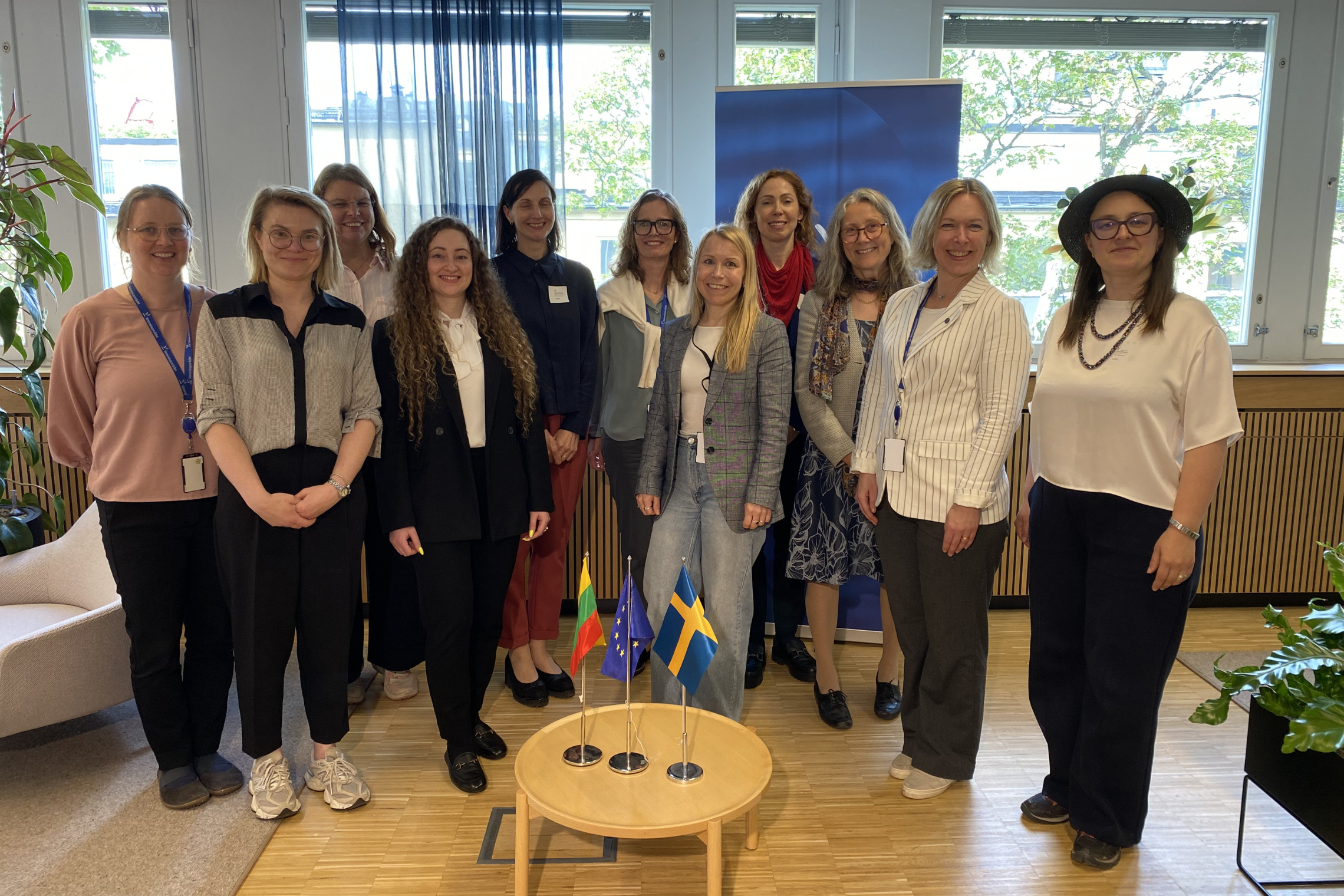
On 15–17 June 2026, the team of the project “Establishment of International Competence Centres” of the Research Council of Lithuania (RCL) visited Sweden, where they met with representatives of the Swedish Research Council (Vetenskapsrådet), Luleå University of Technology (Luleå tekniska universitet, LTU), and competence centres operating in the region. The aim of the visit was to gain insight into Sweden’s models for funding, governance, and performance evaluation of competence centres, as well as to discuss approaches to ensuring their long-term sustainability.
Sweden is one of Europe’s leaders in research and experimental development; therefore, its experience in establishing and developing competence centres is highly relevant for Lithuania, which is currently implementing the initiative to create international competence centres.
During meetings at the Swedish Research Council, participants discussed the principles of the national research system, the role of competence centres in strengthening the science and innovation ecosystem, funding mechanisms, and practices for assessing long-term impact. Particular attention was paid to the Scandinavian approach to sustainability and trust-based governance. In evaluating researchers’ activities, a key criterion is the creation of impact on both science and society, achieved through high research quality, sustainable practices, and strong partnerships with business and regional stakeholders.
RCL representatives presented Lithuania’s science and innovation system, the Council’s funding instruments, and the “Establishment of International Competence Centres” project, under which five international competence centres are being developed in Lithuania. The meetings provided an opportunity to exchange experiences and discuss challenges related to the organisation, financial sustainability, and impact assessment of such centres.
During the visit, the delegation also visited Luleå University of Technology, where they were introduced to practices supporting researchers and had the opportunity to visit active competence centres. The centres presented their operational models, experience in collaboration with industry, and long-term development strategies.
One of the visited centres, the Centre for Advanced Mining and Metallurgy (CAMM), presented a multi-source funding model and highlighted the importance of international cooperation. The DRIZZLE Centre for Stormwater Management shared its experience in planning continuity beyond the main funding period, while the long-standing Centre “Distance Spanning Technologies,” operating for more than three decades, demonstrated the value created through long-term collaboration between academia, industry, and society.
The delegation also visited the science communication centre “House of Technology,” which attracts thousands of visitors annually and promotes engagement with engineering and technology among children and young people through hands-on learning and experimentation.
The visit also included discussions on further opportunities for collaboration between Lithuanian and Swedish researchers. It is expected that the established connections will contribute to new partnerships, joint project initiatives, and increased participation in international programmes.
The experience gained will support the further development of Lithuania’s competence centre initiative and strengthen its international competitiveness.
The visit was partly funded by the Nordic Council of Ministers through the Nordic–Baltic Mobility Programme for civil servants and public administration institutions.
Last updated: 25-06-2026
Related news:
Lithuanian Universities’ Global Networks: How Can They Become a Strategic Asset for the Country?
More Trees in the City – Cleaner Air? According to a Researcher, It’s Not That Simple
RCL delegation explores Finland’s experience with flagship research programmes
Lithuanian Academy of Sciences and Research Council of Lithuania Sign Memorandum of Cooperation