

Medical Technology Trends and Their Role in Personalised Healthcare Discussed in Brussels
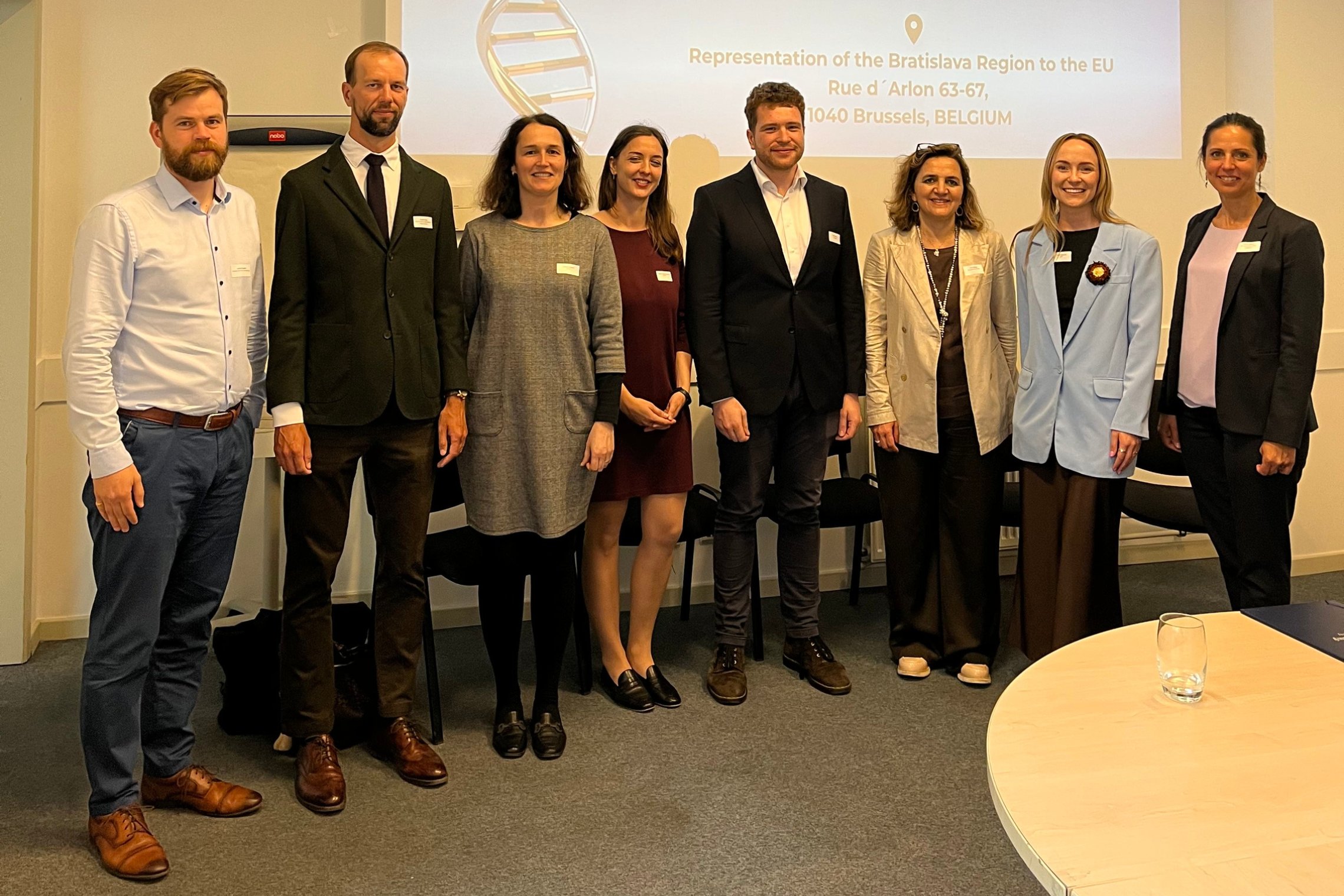
On 4 June 2026, the international event "Medical Technology Trends for Personalised Care" took place in Brussels, bringing together European policymakers, researchers, and industry experts to discuss the role of medical devices in shaping the healthcare systems of the future.
The event was organised by the Lithuanian Research Liaison Office in Brussels (LINO), the Slovak Liaison Office for Research and Development (SLORD), and the Swiss Information Office for Research and Innovation (SwissCore). It provided a platform for knowledge exchange and discussion of the latest developments in the field. Researchers and innovators from Lithuania, Switzerland, and Slovakia presented cutting-edge solutions in microrobotics, deep vein thrombosis monitoring, and medical implants, demonstrating the breadth of innovation in medical technologies.
Živilė Grabauskė, Policy Analyst at LINO, highlighted the rapidly growing importance of medical devices in diagnostics, patient monitoring, treatment, and rehabilitation. While these technologies have become an integral part of modern healthcare, their significance within the broader innovation ecosystem does not always receive the recognition it deserves.
The future of the European regulatory framework for medical devices was also a key topic of discussion. Flora Giorgio, Head of the Medical Devices Unit at the European Commission's Directorate-General for Health and Food Safety (DG SANTE), presented the proposed revision of the Medical Devices Regulation (MDR) and the In Vitro Diagnostic Medical Devices Regulation (IVDR). The proposed changes aim to simplify regulatory procedures, reduce administrative burden, and maintain the highest standards of patient safety, thereby strengthening the competitiveness of Europe's medical technology sector and fostering innovation.
Lithuania's research potential was represented by Dr Andrius Rapalis, researcher at the Institute of Biomedical Engineering of Kaunas University of Technology (KTU). He presented the commercially available TeltoHeart smart monitoring device, as well as the ThrombUS+ project, which is developing a wearable diagnostic solution for the early detection and monitoring of deep vein thrombosis. The project integrates artificial intelligence, ultrasound, photoplethysmography, and augmented reality technologies to provide patients and healthcare professionals with real-time information that supports more accurate diagnosis, continuous monitoring, and improved treatment outcomes.
The discussions in Brussels once again underscored the importance of innovation, effective regulation, and international cooperation in advancing next-generation medical technologies. Participants emphasised that close collaboration between academia, industry, and policymakers is essential for building a modern, patient-centred healthcare system that meets the evolving needs of European society.
Last updated: 29-06-2026
Related news:
Lithuanian Universities’ Global Networks: How Can They Become a Strategic Asset for the Country?
More Trees in the City – Cleaner Air? According to a Researcher, It’s Not That Simple
RCL delegation explores Finland’s experience with flagship research programmes
Lithuanian Academy of Sciences and Research Council of Lithuania Sign Memorandum of Cooperation