

After Dark, the City Is Created Anew: What Does Artificial Light Reveal About Its Priorities?
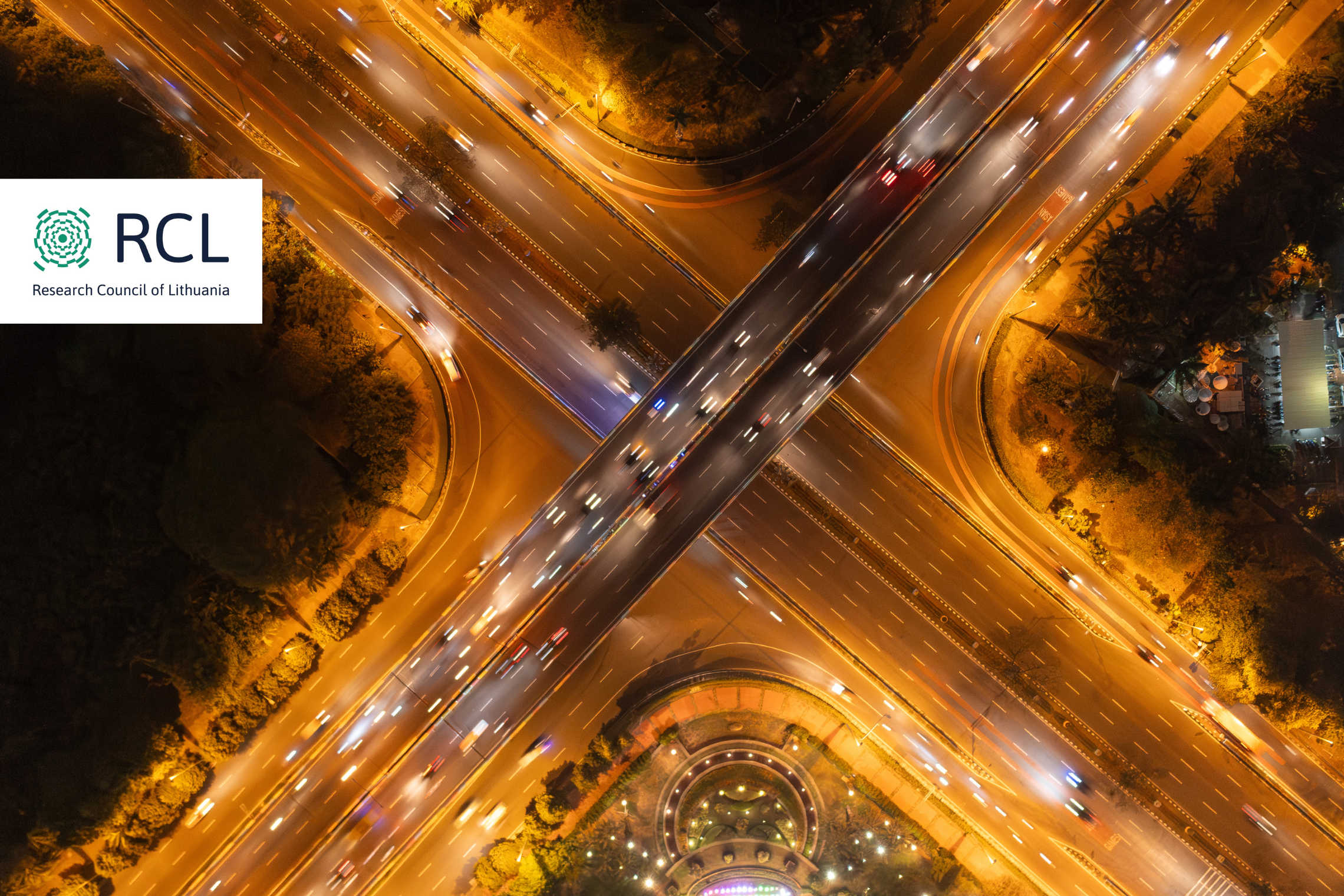
When darkness falls, the city does not disappear – light reconstructs its image. Some streets, squares and buildings are brought into focus, while other spaces recede into darkness. These decisions do more than help people find their way or create a sense of safety. They also reveal what the city considers important, representative and worthy of being seen.
This is the nocturnal face of the city being explored this summer by Medeina Macijauskaitė, a student at University College Cork in Ireland. As part of a student summer research internship funded by the Research Council of Lithuania (RCL), she is conducting a study entitled The Colour of the Night: Ideology, Power and the City in Artificial Light under the supervision of Associate Professor Rimvydas Leipus of the Lithuanian Academy of Music and Theatre (LMTA).
The study examines artificial lighting not merely as a technical component of urban infrastructure, but also as a tool that shapes people’s well-being, their perception of the city and the visibility of different urban spaces.
This year, the RCL is funding 236 student summer research internship placements. Throughout July and August, students are carrying out scientific and artistic research at Lithuanian research and higher education institutions, working alongside experienced researchers and artists. On 26 August, they will present their results at the final conference, A Summer of Research with the RCL, organised by the Research Council of Lithuania.
Urban Lighting Is More Than a Technical Solution
Macijauskaitė is carrying out the practical component of her research in several stages. Visiting central, representative, industrial and residential areas of Kaunas, she photographs different types of artificial lighting, uses a colourimeter to record their characteristics and observes how light transforms the appearance of the city’s infrastructure at night.
The visual research is complemented by a reflective journal in which she records the thoughts, emotions and sensations prompted by different locations across the city. This allows her to assess not only the visual but also the psychological effects of artificial light – or its absence – on people.
“The essence of the research is to demonstrate that lighting is not merely a technical solution. Different types and shades of light affect people and their senses, even when they are not always chosen consciously. Within urban infrastructure, light primarily becomes a symbol of safety, but it is also perceived as a sign of the city’s progress,” Macijauskaitė explains.
According to her research supervisor, Rimvydas Leipus, once we begin to observe urban lighting consciously, it becomes clear that the city at night is not simply an extension of the city by day.
“After dark, the city is created anew. Light establishes a hierarchy of visibility: certain buildings, monuments, advertisements and streets become bright and prominent, while other places recede into darkness. It can represent history and power, encourage consumption, create a sense of safety or, conversely, highlight social exclusion. The cityscape is not neutral – it is a system of choices that reveals what the city wants to make visible,” Leipus says.
An Unexpected View of Vilijampolė
While exploring different parts of Kaunas, Macijauskaitė identified contrasts between the city’s older districts and areas that are currently being developed. However, some of her observations challenged her initial impressions and prompted her to revise assumptions formulated during the theoretical stage of the research.
One of the most unexpected discoveries was Vilijampolė, an area of the city long associated with an image of darkness and insecurity.
“Even the streets of old Vilijampolė are relatively brightly lit, while a large number of streetlights have been installed in the newly developing neighbourhoods along the Neris. This was unexpected and led me to reconsider some of the claims I had formulated in the theoretical part of the research,” Macijauskaitė says.
Elsewhere in the city, she observed differences in lighting between older and newer residential and industrial districts. According to her observations, some parts of old Petrašiūnai have significantly less lighting, while newly developed neighbourhoods are dominated by bright illumination, often produced by LED lights.
“Lighting highlights the city’s priorities. There is a clear contrast between older and newer residential or industrial districts. I am also very interested in observing how different colours of light alter not only our perception of the environment but also a person’s psychological state,” the student notes.
From Observation to Evidence-Based Interpretation
Artificial urban light is a visual and multifaceted research subject. One of the most important tasks of the internship is therefore learning to distinguish between what is actually visible and how the observed image is interpreted.
According to Leipus, the first step is to describe the positioning of light sources as accurately as possible, assess what the lighting highlights and what it leaves unseen, and observe how it changes the perception of a particular space and affects a person’s well-being. Only then is it possible to raise questions about the social, political or cultural meanings of this organisation of visibility.
“Evidence is what distinguishes a well-founded analysis from an overly subjective interpretation. A claim must be supported by observation, comparisons between different locations, the history of the city, specific decisions or theoretical sources. For example, it is not enough to describe blue light as cold or alienating. One must demonstrate where it is used, what it singles out, how it affects a person’s relationship with that location and how the space differs from others,” the research supervisor explains.
Macijauskaitė is organising the material she has collected into a visual research atlas combining observations, photographs, city plans and short descriptions. According to Leipus, the atlas is more than an archive of material: by selecting, grouping and comparing images, the student independently develops her own perspective on the city under investigation.
“My role as a research supervisor is not to provide a ready-made interpretation. I help narrow the research subject, formulate questions and select criteria for comparing different urban spaces. This gives the student freedom of interpretation, but also the responsibility to substantiate her insights,” Leipus says.
The Value of the Research: From Individual Well-Being to Urban Planning
The findings of the research may contribute to discussions on the quality of public spaces, residents’ safety and well-being, light pollution, social exclusion and urban identity. They also encourage a more critical assessment of everyday infrastructure decisions that are often taken for granted.
“This research could inform discussions about safety and people’s well-being in residential environments, as it seeks to reveal how artificial light affects individuals and how they feel. Its insights could also prove useful when planning urban infrastructure and considering what residents in different parts of the city genuinely need,” Macijauskaitė says.
Leipus emphasises that this type of research enables urban lighting to be discussed in terms that extend far beyond technical or aesthetic considerations. It relates to how a city represents itself, how it treats its heritage, which spaces it considers important and for whom those spaces are created.
“Light does not merely allow us to see the city – it actively shapes the city we see and the way we feel within it,” the research supervisor concludes.
Macijauskaitė will present a more detailed account of how artificial light transforms urban spaces and people’s relationship with them on 26 August at the RCL’s final conference, A Summer of Research with the RCL.
Last updated: 17-08-2026
Related news:
Lithuanian Universities’ Global Networks: How Can They Become a Strategic Asset for the Country?
More Trees in the City – Cleaner Air? According to a Researcher, It’s Not That Simple
RCL delegation explores Finland’s experience with flagship research programmes
Lithuanian Academy of Sciences and Research Council of Lithuania Sign Memorandum of Cooperation