

RCL delegation explores Finland’s experience with flagship research programmes
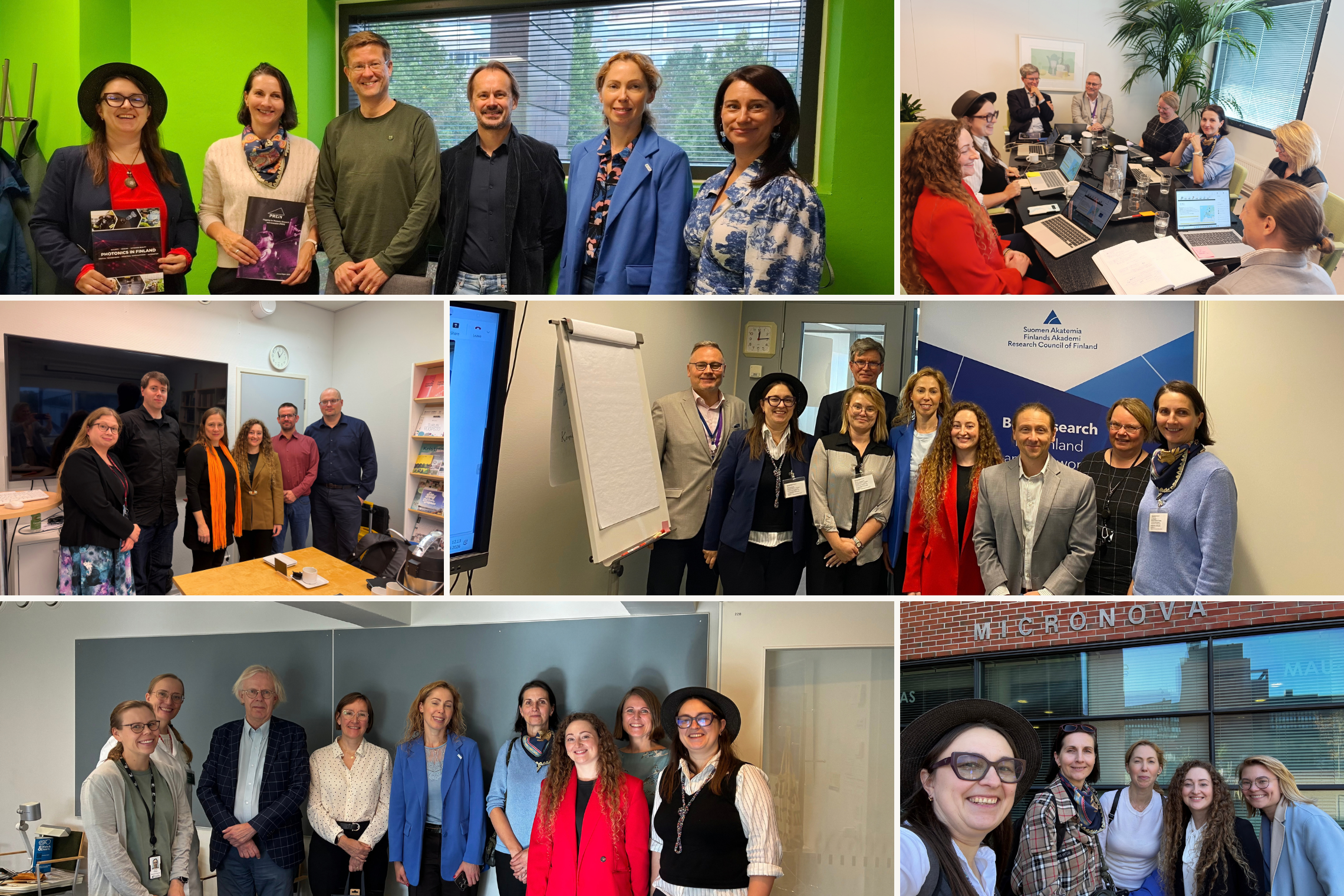
On 14–16 September, a delegation from the Research Council of Lithuania (RCL) visited Finland to discuss the country’s long-term research funding model, the operating principles of its research flagships and their impact on the wider research and innovation ecosystem with representatives of the Research Council of Finland and Finnish flagship programmes. Finland’s experience is particularly relevant to Lithuania as it establishes five international centres of excellence and develops a long-term model for their operation.
During the visit, the RCL delegation travelled to Helsinki, Espoo, Turku and Tampere, meeting with representatives of the Research Council of Finland and teams from four flagship programmes. Discussions focused on long-term funding, monitoring and evaluation, collaboration with industry, the development of early-career researchers, the commercialisation of research results and international partnerships.
Finland’s Flagship Programme was launched in 2018. Today, 14 flagships operate across the country, with the Research Council of Finland having committed nearly EUR 300 million in total funding. The experience accumulated over the years provides valuable insight not only into the scientific performance of individual flagships, but also into their long-term impact on Finland’s research and innovation ecosystem.
Long-term funding for both research and the wider ecosystem
One of the key principles of the Finnish model is its long-term approach. Flagships are funded for eight-year periods, and their mission extends beyond conducting research of the highest scientific quality. They bring together broader research and innovation ecosystems, strengthen collaboration with industry, contribute to the development of early-career researchers, education and public engagement, while pursuing long-term economic and societal impact.
Another important feature of the Finnish model is trust-based monitoring. Once funding has been awarded and the flagships begin implementing their research agendas, the system seeks to avoid unnecessary administrative burden. Automated processes and a strong focus on results and impact allow greater responsibility to be placed in the hands of the flagships and their teams.
From sustainable biomaterials to quantum technologies
At Aalto University in Espoo, the RCL delegation learned about the work of the FinnCERES Flagship. The centre was presented by Professor Monika Österberg, Project Manager Sanna Hellsten and Professor Tomi Laurila. This multidisciplinary flagship conducts research in biomass, lignocellulose, biomaterials, photonics, electronics and pharmaceuticals, with the development of new bioeconomy solutions among its key objectives.
The discussions focused in particular on the pathway from fundamental research to the commercialisation of new technologies, intellectual property management and collaboration with industry.
Research, industry and talent within a single ecosystem
In Turku, the RCL delegation visited InFLAMES – Innovation Ecosystem based on the Immune System, a flagship bringing together the University of Turku, Åbo Akademi University and a broad network of partners. Its research focuses on immunology, diagnostics for inflammatory diseases and drug development.
InFLAMES brings together more than 400 researchers, 58 research groups and over 150 industry partners. Its activities span the entire pathway from fundamental discoveries in immunology to personalised medicine solutions in clinical practice.
In Tampere, the delegation was introduced to PREIN – Flagship on Photonics Research and Innovation. The flagship brings together more than 500 researchers, 50 research groups and an extensive network of companies and start-ups, covering the full spectrum from fundamental photonics research to technologies applied in industry.
Finland’s experience informs the development of Lithuania’s centres of excellence
During the meetings, RCL presented Lithuania’s research and innovation ecosystem and five international Centres of Excellence being established in the country. Their fields are plant phenotyping; autonomous and remotely operated systems; the microbiome and personalised medicine; advanced disease modelling; and terahertz and hybrid semiconductor chips.
The visit was partly funded through the Nordic Council of Ministers’ Nordic-Baltic Mobility Programme for Civil Servants and Public Institutions.
More information about the international Centres of Excellence being established in Lithuania can be found here.
Last updated: 25-09-2026
Related news:
V. Nekrošius: The Essence of the Constitution Lies Not Only in Rules, but Also in Values
“Science Summer with RCL”: Young Researchers Presented Their Research Results
“(re)SEARCH 2026”: Science at the Intersection of Openness, Security and International Influence
After Dark, the City Is Created Anew: What Does Artificial Light Reveal About Its Priorities?