

More Than Just a Plastic Particle: Student Investigates How Microplastics Can Alter the Pathways of Heavy Metals in the Environment
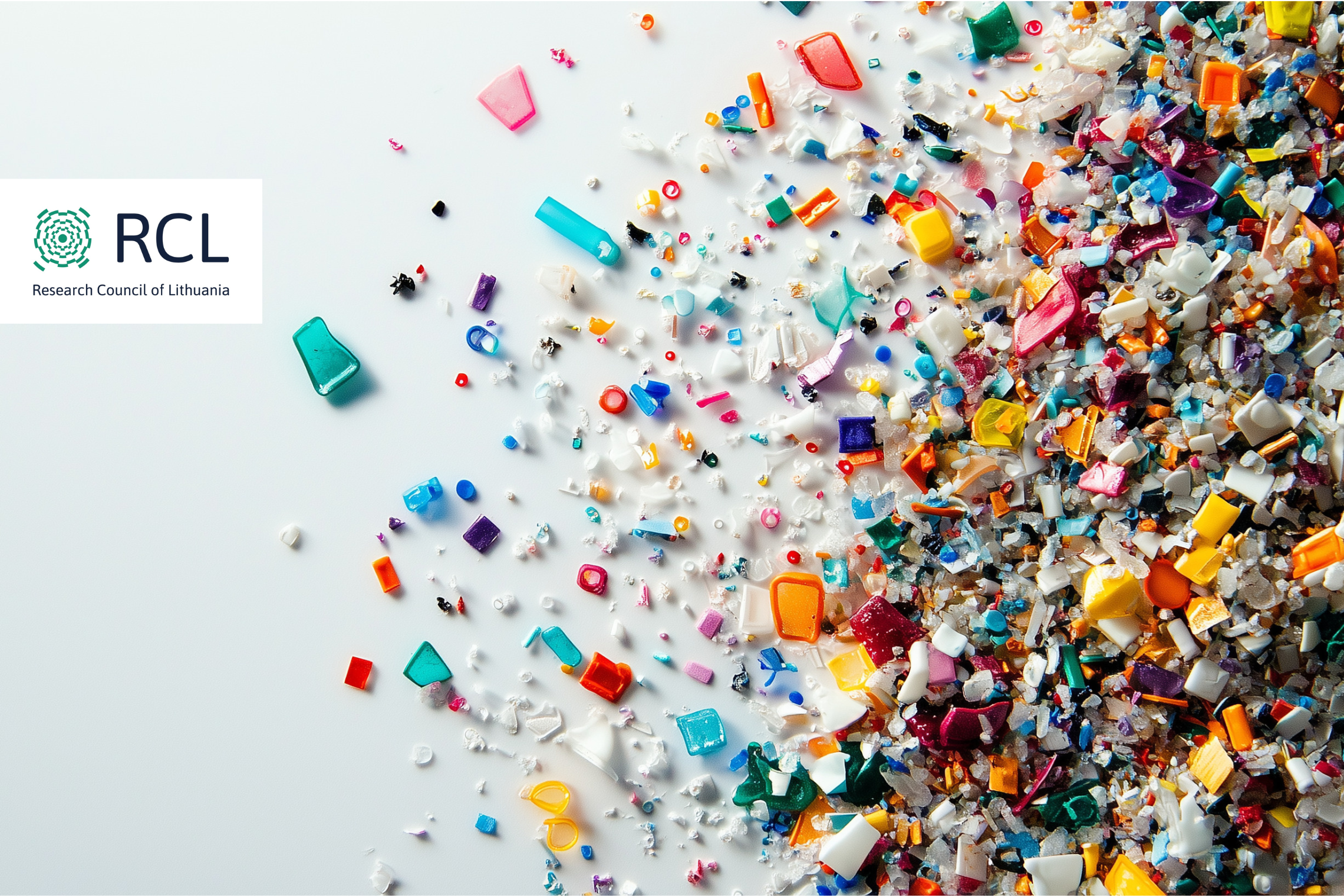
Microplastics in the environment are more than just tiny plastic particles. Their surfaces can accumulate other pollutants, including heavy metals. This summer, Rimantė Nokšaitė, a student at Kaunas University of Technology, investigated how this interaction occurs and what determines the ability of microplastics to adsorb heavy metals at the Lithuanian Research Centre for Agriculture and Forestry (LAMMC).
During a student summer research internship funded by the Research Council of Lithuania (RCL), she examined the interaction of low- and high-density polyethylene particles with copper, zinc and cadmium. The student compared conventional and artificially aged plastic particles and observed how the results varied depending on interaction time, particle quantity and metal concentration.
“The widespread presence of microplastics determines the scale of the problem, while their ability to adsorb toxins present in the environment is the key mechanism through which they can alter the behaviour of these pollutants and their pathways through the environment. If I had to identify one essential aspect, I would emphasise precisely this final part of the chain – the change in pollutant pathways,” says R. Nokšaitė.
When one method shows no change, another already detects it
One of the most interesting aspects of the internship for the student was comparing results obtained using different analytical methods. The ICP-OES method was used to determine changes in heavy metal concentrations, while changes in the surface properties of microplastics were assessed using ATR-FTIR.
“In the laboratory, I found that although the ICP-OES instrument showed no decrease in metal concentration in the solution and the adsorption capacity appeared quantitatively to be zero, ATR-FTIR analysis was already detecting clear spectral changes in several particles. This fundamentally changed my perspective – I realised that the problem of microplastic pollution cannot be assessed solely on the basis of changes in mass,” says R. Nokšaitė.
The student identifies this observation as one of the findings that most significantly changed her understanding of microplastic pollution. The research also demonstrated how many different factors need to be considered in order to understand the interaction between microplastics and heavy metals.
“This research helped me understand that metal transport is a dynamic process that depends not only on the degree of microplastic degradation or its properties, but also on the unique characteristics of the metals – their hydrated ionic radius, electronegativity and concentration in the environment,” says the student.
Research begins with the question “why?”
Internship supervisor Dr Karolina Barčauskaitė emphasises that such an internship is not only about learning how to perform laboratory procedures. The first step is to understand the research problem itself, which is why the work begins with an analysis of scientific literature and previous studies.
“The greatest challenge is usually introducing the student to the research topic. Their subsequent progress during the internship largely depends on how quickly they understand what they are doing and why they are doing it. Once students have a good understanding of the essence of the research, they find it easier to master sample preparation methods, carry out measurements accurately, critically interpret the results and understand the broader context of the issue being studied,” says Dr K. Barčauskaitė.
As R. Nokšaitė already had laboratory experience, she was entrusted with most stages of sample preparation and the research process. The exception was determining metal concentrations using ICP-OES, which, according to the internship supervisor, requires specific knowledge, practical skills and more time to understand the principles of measurement.
The results obtained by the student during the internship are also compared with previously published scientific data, with analysis focusing on how particle size, surface properties, the nature of the pollutants studied and experimental conditions may have influenced the results.
“Critical evaluation of the results helps us understand that microplastics are not merely environmental pollutants, but also active surfaces capable of altering the transport, availability and behaviour of other pollutants in the environment,” says Dr K. Barčauskaitė.
Research helps us better understand how pollutants move through the environment
According to the internship supervisor, the value of such research lies primarily in improving our understanding of the role of microplastics in the environment. Microplastic particles are found in air, water and soil, making it important to assess not only their prevalence but also their interactions with other environmental pollutants.
“By determining how microplastics interact with heavy metals, we can more accurately assess pollutant migration, bioavailability and potential risks to aquatic or soil ecosystems. This knowledge is important for improving pollution risk assessment and developing science-based environmental solutions,” says Dr K. Barčauskaitė.
R. Nokšaitė’s research is one of the topics explored as part of this year’s RCL student summer research internship programme. In 2026, 236 students participated in the programme, completing internships at Lithuanian universities and research institutes during July and August.
Students will present the results of their internships on 26 August at the RCL’s closing conference, “Summer of Science with RCL”, to be held at the Life Sciences Center of Vilnius University.
Last updated: 25-08-2026
Related news:
Lithuanian Universities’ Global Networks: How Can They Become a Strategic Asset for the Country?
More Trees in the City – Cleaner Air? According to a Researcher, It’s Not That Simple
RCL delegation explores Finland’s experience with flagship research programmes
Lithuanian Academy of Sciences and Research Council of Lithuania Sign Memorandum of Cooperation