

How Can Research Performance Assessment Be Improved? RCL Presents an Analysis of the Expert Evaluation Process
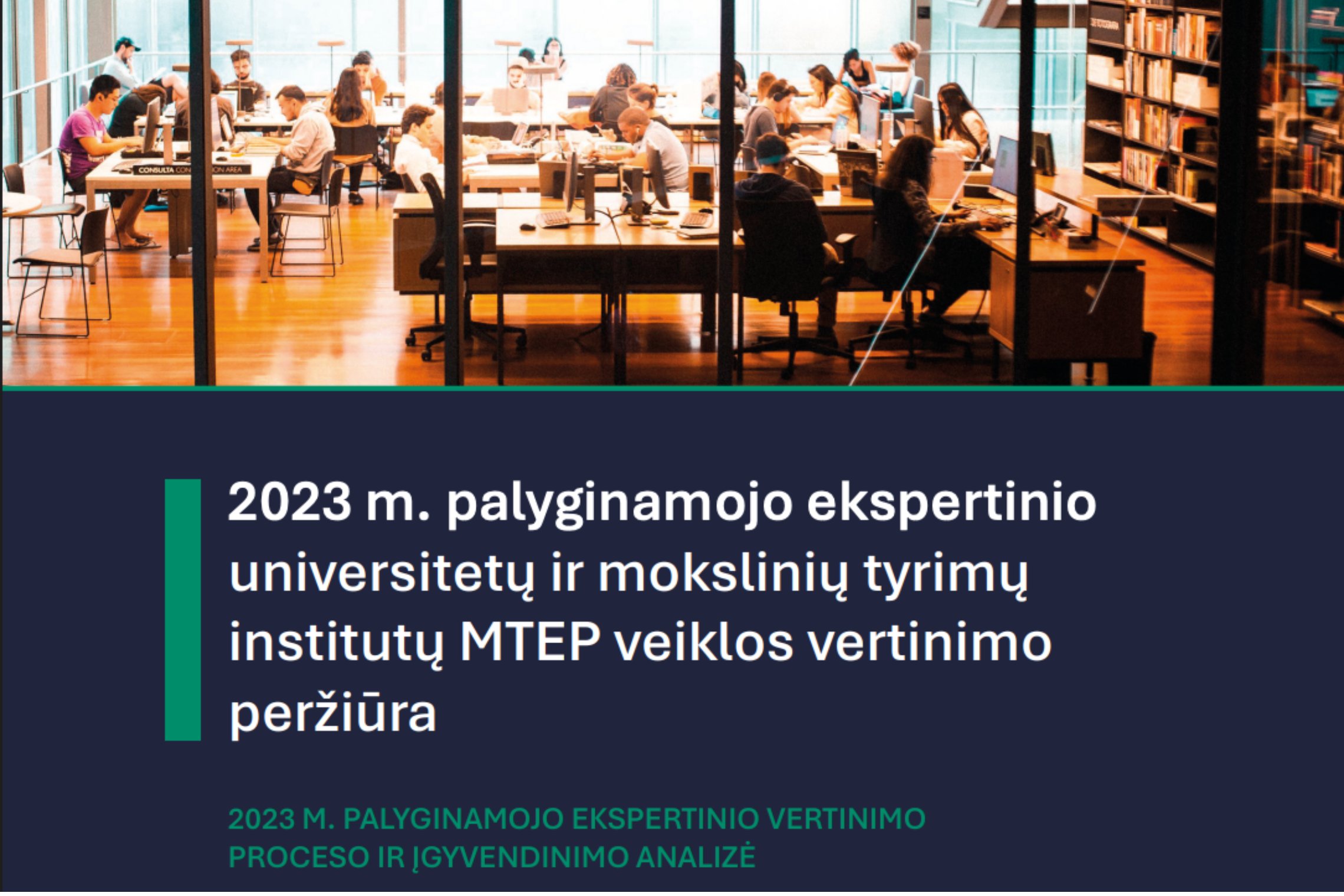
The Research Council of Lithuania (RCL) has prepared a study analysing the 2023 Comparative Expert Evaluation of research and experimental development (R&D) activities at universities and research institutes. The study reviews the experience gained from organising the previous evaluation, examines methodological and procedural challenges, and provides recommendations for improving the assessment system ahead of the next Expert Evaluation, scheduled for 2028.
Expert Evaluation (formerly known as Comparative Expert Evaluation until the 2023 assessment) is one of Lithuania’s key research policy instruments, helping to assess the quality, international competitiveness and societal impact of R&D activities carried out by universities and research institutes. Its results inform the allocation of state budget funding for R&D, decisions on the right to conduct doctoral studies, and the development of long-term research policy priorities.
The RCL study sought to identify which elements of the 2023 evaluation process worked well, what challenges emerged, and what changes are needed to ensure a more transparent, consistent assessment aligned with international practice. The analysis covered evaluation criteria, data submission requirements, the composition of assessment units, expert selection, the organisation of expert panels and the feedback process.
Lessons from the 2023 Evaluation to Inform Future Improvements
The 2023 Comparative Expert Evaluation involved 28 universities and research institutes, comprising 85 assessment units. Their activities were evaluated by 113 international experts from 26 countries, working across 13 expert panels. The results of Expert Evaluation determine the allocation of 70% of the state budget's baseline funding for R&D activities across all fields of research.
The evaluation results highlighted the strengths of Lithuania’s research institutions: 53% of assessment units were recognised as internationally strong or international leaders in at least one field of research, while seven institutions received the highest scores of 4.5 or 5 in at least one field. In addition, 68% of assessment units were recognised as important partners beyond the academic community.
The institutions themselves also assessed the organisation of the evaluation positively. Of the 85 assessment units, 76 participated in an RCL survey, with 76% of respondents rating the organisation of the evaluation as good, very good or excellent. The overall average score was 8.3 out of 10.
Nevertheless, the study found that, despite the generally positive feedback, certain elements of the process need to be reviewed to improve the consistency, clarity and reliability of future evaluations.
Recommendations to Refine Evaluation Criteria and Data Submission Requirements
The study concludes that the three main evaluation criteria – R&D quality, economic and social impact, and future potential – are broadly aligned with international practice. However, the analysis revealed that their interpretation and application were not always consistent across expert panels.
To improve consistency, the study recommends refining the descriptions of evaluation criteria and rating scales, developing clearer methodological guidelines for experts, and strengthening cooperation between different panels.
Particular attention is also given to the data submitted by institutions. The study recommends reducing unnecessary information, defining data requirements more clearly, and ensuring that experts receive sufficient information to make well-founded assessments. It also emphasises the need to take account of the specific characteristics of different research fields and the particularities of interdisciplinary research.
Greater Transparency in Expert Selection and Feedback Procedures
Another key area addressed by the study is the organisation of the expert evaluation process. Recommendations include establishing clearer selection criteria for experts and panel chairs, strengthening the prevention of conflicts of interest, ensuring appropriate expert competencies, and promoting greater geographical and gender diversity.
The analysis also examines the organisation of expert site visits to institutions. Although in-person visits were viewed positively, they require considerable resources. The study therefore recommends considering longer site visits.
The importance of feedback is highlighted separately. The study recommends allowing institutions more time to review expert reports and submit comments, providing greater opportunities for detailed discussions of evaluation findings, and strengthening quality assurance procedures for expert reports.
Preparing for the 2028 Evaluation: A Focus on the Objectives of the Overall System
One of the study’s most significant conclusions is the need to define the objectives of Expert Evaluation more clearly. Currently, evaluation results serve several purposes: assessing the quality of institutions’ R&D activities, allocating funding, informing decisions on doctoral education, and shaping research policy.
The study notes that achieving these objectives may require different assessment methods. It therefore recommends reassessing how well these purposes align and defining the overall role of Expert Evaluation more precisely.
The study also emphasises the importance of taking international developments in responsible research assessment into account when improving Lithuania’s research evaluation system. These developments encourage a broader understanding of research quality, moving beyond quantitative indicators to appropriately recognise societal impact, interdisciplinarity and the institutional context in which research is conducted.
The findings and recommendations of the RCL study provide a basis for further discussions on the Expert Evaluation models for 2028 and 2033. The aim is to ensure that future evaluations are not only transparent and consistent, but also better reflect the quality of Lithuania’s research institutions, their contribution to scientific progress and their wider impact on society.
The full study is available here.
Last updated: 29-10-2026
Related news:
Lithuania Co-Organises the GRC European Regional Meeting for the First Time
Lithuania and Taiwan Strengthen Cooperation in Laser Technologies
RCL and NASA Discuss Opportunities for Cooperation
Terahertz and Hybrid Semiconductor Chips Competence Centre Launches Operations in Lithuania