

Lithuania Co-Organises the GRC European Regional Meeting for the First Time
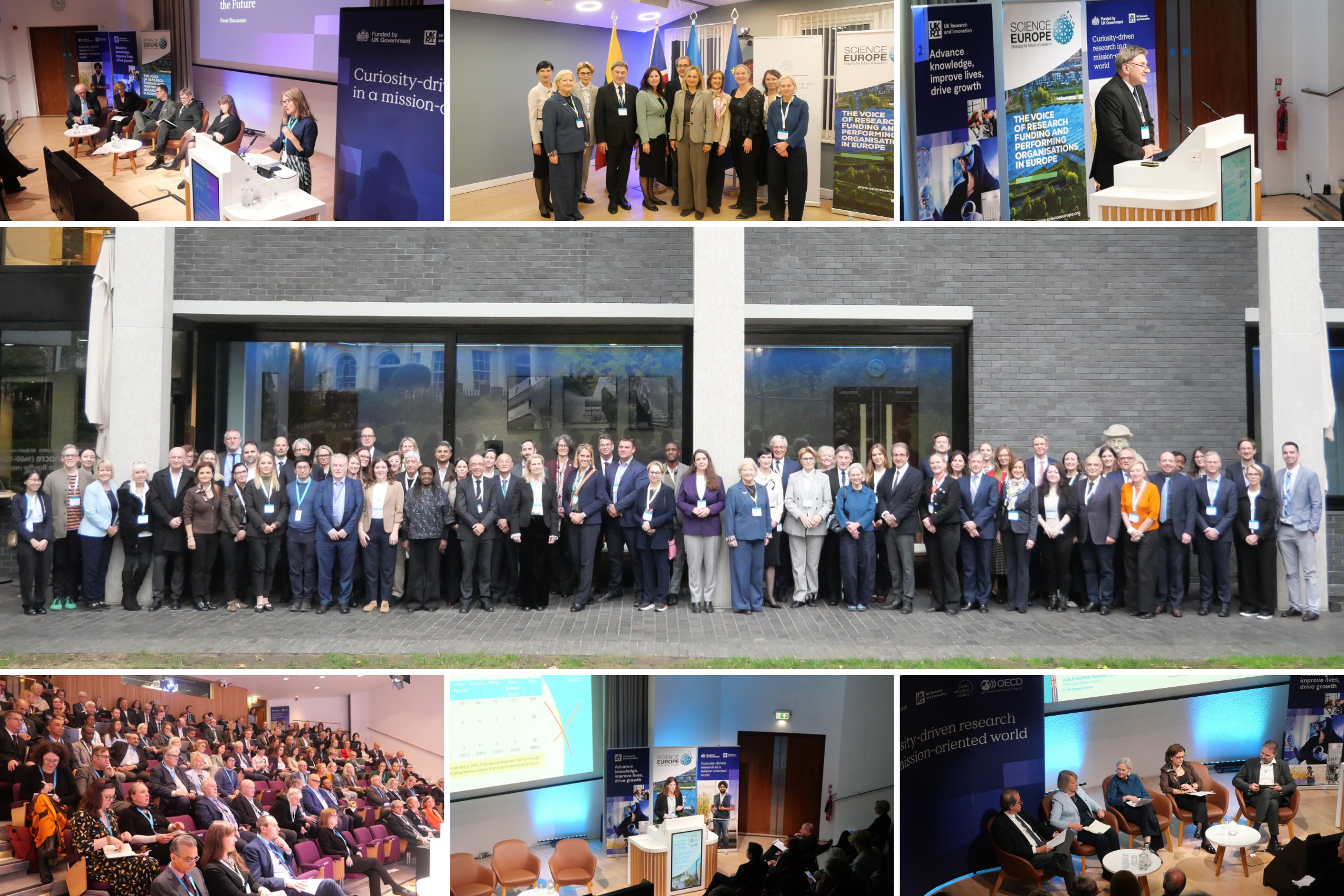
The European Regional Meeting of the Global Research Council (GRC) is taking place in London on 27–30 October, with the Research Council of Lithuania (LMT) serving as a co-organiser for the first time, alongside UK Research and Innovation (UKRI) and Science Europe. Lithuanian representatives are actively contributing to the programme by delivering presentations, participating in discussions and moderating sessions.
The meeting brings together leaders of research funding organisations, science policy representatives and researchers from Europe and other regions of the world. The discussions focus on curiosity-driven research (CDR), particularly its funding conditions and long-term value to society. Curiosity-driven research is initiated by researchers themselves and is primarily motivated by the pursuit of answers to scientific questions and the advancement of knowledge, rather than predetermined practical applications.
“We are delighted to co-organise this meeting with UKRI and Science Europe, and we thank our partners for their cooperation. For Lithuania, exchanging experience with research funding organisations across Europe and beyond is important for strengthening support for research. Curiosity-driven research requires sustained funding, even when its outcomes and potential applications cannot yet be anticipated. This meeting provides an opportunity to discuss how funding decisions can support a long-term perspective and how we can better communicate the value of such research to society,” says Prof. Juozas Augutis, Acting Chair of the Research Council of Lithuania.
Lithuania’s contribution is also reflected in the meeting programme. Prof. Augutis is participating in the opening of the GRC European Regional Meeting, a high-level discussion organised jointly with the OECD Global Science Forum, and a session on the role of public research funders. The latter session is moderated by Aurelija Povilaikė, Head of the International Cooperation Division at LMT.
Prof. Jolanta Šinkūnienė, a member of LMT’s Committee for the Humanities and Social Sciences and a professor at Vilnius University, is contributing to a discussion on the place of CDR within the research system. Regina Valutytė, Vice-Minister of Education, Science and Sport of Lithuania, is delivering a keynote address on demonstrating and communicating the value of curiosity-driven research. Other participants in discussions on the role of CDR within the research system include Prof. Artūras Žukauskas, Chair of LMT’s Committee for Research and Higher Education Policy; Prof. Jurgita Verbickienė, Chair of the Committee for the Humanities and Social Sciences; Prof. Vilmantė Borutaitė, Chair of the Committee for Natural and Technical Sciences; and representatives of the LMT administration.
The programme also features Maria Leptin, President of the European Research Council, Alejandro Adem, Chair of the GRC, and other representatives of the international research community.
“Curiosity-driven research is essential for advancing scientific knowledge and creating new opportunities for society that often cannot be anticipated at the outset of a research project. It helps address societal challenges through unexpected discoveries and by laying the foundations for future progress. Public research funding and performing organisations play a crucial role in supporting different approaches to research while safeguarding researchers’ freedom to ask new questions and explore uncharted areas of knowledge,” says Mari Sundli Tveit, President of Science Europe.
“Many of the discoveries that have transformed our lives, economies and societies began with researchers working together to explore fundamental questions, without knowing where the answers might lead. For curiosity-driven research to continue generating new knowledge and laying the foundations for future innovation, it is essential that research funders also come together to learn from one another and strengthen partnerships,” emphasises Prof. Christopher Smith, UKRI International Champion and Executive Chair of the Arts and Humanities Research Council.
On 28 October, LMT hosted a reception for meeting participants at the Embassy of Lithuania in the United Kingdom. The reception featured remarks by Lithuanian Ambassador Asta Radikaitė, Vice-Minister Regina Valutytė and international partners. It provided an additional opportunity to strengthen Lithuania’s research ties with international partners.
The discussions in London will contribute to preparations for the 15th GRC Annual Meeting, scheduled to take place in Cape Town, South Africa, on 24–28 May 2027. The meeting will further explore the importance of curiosity-driven research and how its value can be demonstrated.
About the Global Research Council
The Global Research Council (GRC) brings together the heads of science and engineering funding agencies from around the world. It promotes the exchange of experience and good practices and strengthens international cooperation among research funding organisations.
About UK Research and Innovation
UK Research and Innovation (UKRI) is the United Kingdom’s research and innovation funding organisation. It brings together seven research councils, the innovation agency Innovate UK, and Research England, which supports research and knowledge exchange at higher education institutions in England.
About the Research Council of Lithuania
The Research Council of Lithuania (LMT) provides competitive research funding, offers expert advice on science policy and promotes international research cooperation. Its activities contribute to strengthening Lithuania’s research community and enhancing the quality and impact of research.
About Science Europe
Science Europe represents major European public organisations that fund and perform high-quality research. It brings together the expertise of its members to improve research conditions and strengthen the benefits of research for society.