

Partners Sought in Brussels for Future Artificial Intelligence Projects in Europe
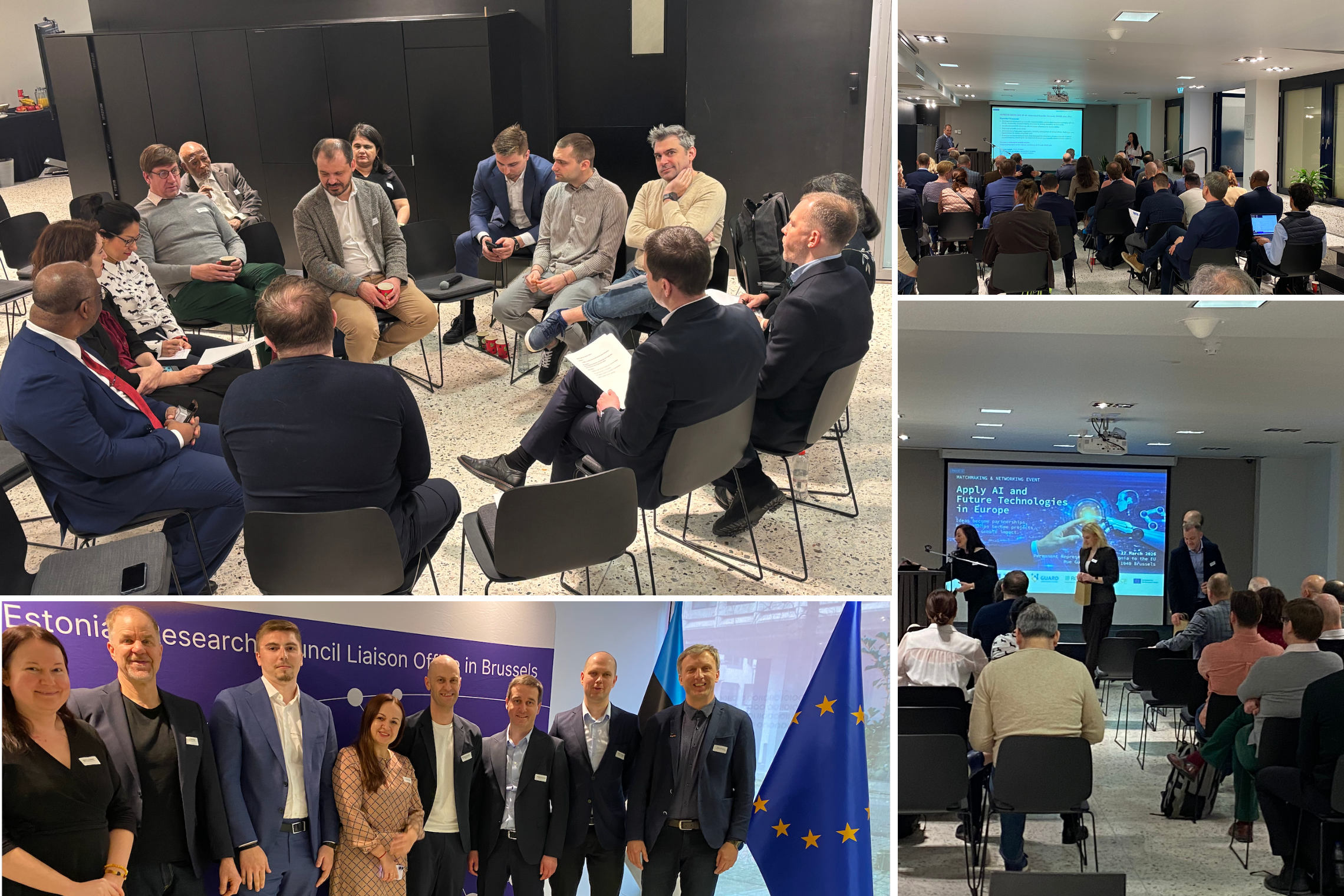
On 26–27 March, more than 60 researchers and innovators from nearly 20 countries gathered in Brussels to seek partners for international consortia aiming to participate in the 2027 calls of the Horizon Europe programme.
During the two-day event, participants networked and discussed joint project ideas in the field of applied artificial intelligence (AI). Attendees included representatives from universities, colleges, research centres, public sector institutions, start-ups, and businesses from Lithuania, Estonia, Latvia, Belgium, the Netherlands, Finland, Poland, Austria, Romania, Greece, Portugal, Slovenia, Slovakia, Switzerland, Luxembourg, the United Kingdom, Ghana, and other countries.
The objective of the event was to facilitate new connections and help identify partners for international research and innovation consortia aligned with seven selected calls from the Horizon Europe 2027 work programme. These calls covered a wide range of topics, including AI applications in industry and manufacturing, research, healthcare, public administration and environmental protection, robotics, digital twins, the development of large language models and so-called frontier models, as well as human-AI collaboration, human-centric AI, the interaction between AI and social sciences, AI ethics, and international cooperation between Europe and Africa in the field of AI.
The strong interest in the event reflects the growing importance of applied AI, as organisers received more applications than they could accommodate.
Both days of networking featured an intensive programme: participants attended four European Commission presentations on the EU Applied AI strategy and Horizon Europe work programme calls, received guidance from National Contact Points (NCPs) on successful partner search and consortium building, delivered short pitches, engaged in “world café” discussions on AI research, innovation and policymaking, held around 80 individual 1:1 meetings, and participated in numerous informal networking conversations.
Participants emphasised that although partner searches are increasingly conducted online, in-person meetings remain essential, as they enable faster relationship-building and help refine shared project directions.
The event was organised by the Research and Innovation Liaison Office of the Research Council of Lithuania (RCL) in Brussels (LINO), in cooperation with National Contact Points (NCPs) and partners from Estonia, Bulgaria, and Ukraine.
Lithuania was represented by participants from Vilnius University, Kaunas University of Technology, Vilnius Design College, Kaunas College, and the company Neurotechnology.
Last updated: 09-04-2026
Related news:
Lithuanian Universities’ Global Networks: How Can They Become a Strategic Asset for the Country?
More Trees in the City – Cleaner Air? According to a Researcher, It’s Not That Simple
RCL delegation explores Finland’s experience with flagship research programmes
Lithuanian Academy of Sciences and Research Council of Lithuania Sign Memorandum of Cooperation