

Seeing What Has Gone Unnoticed: How Star Clusters Help Reconstruct the History of Galaxies
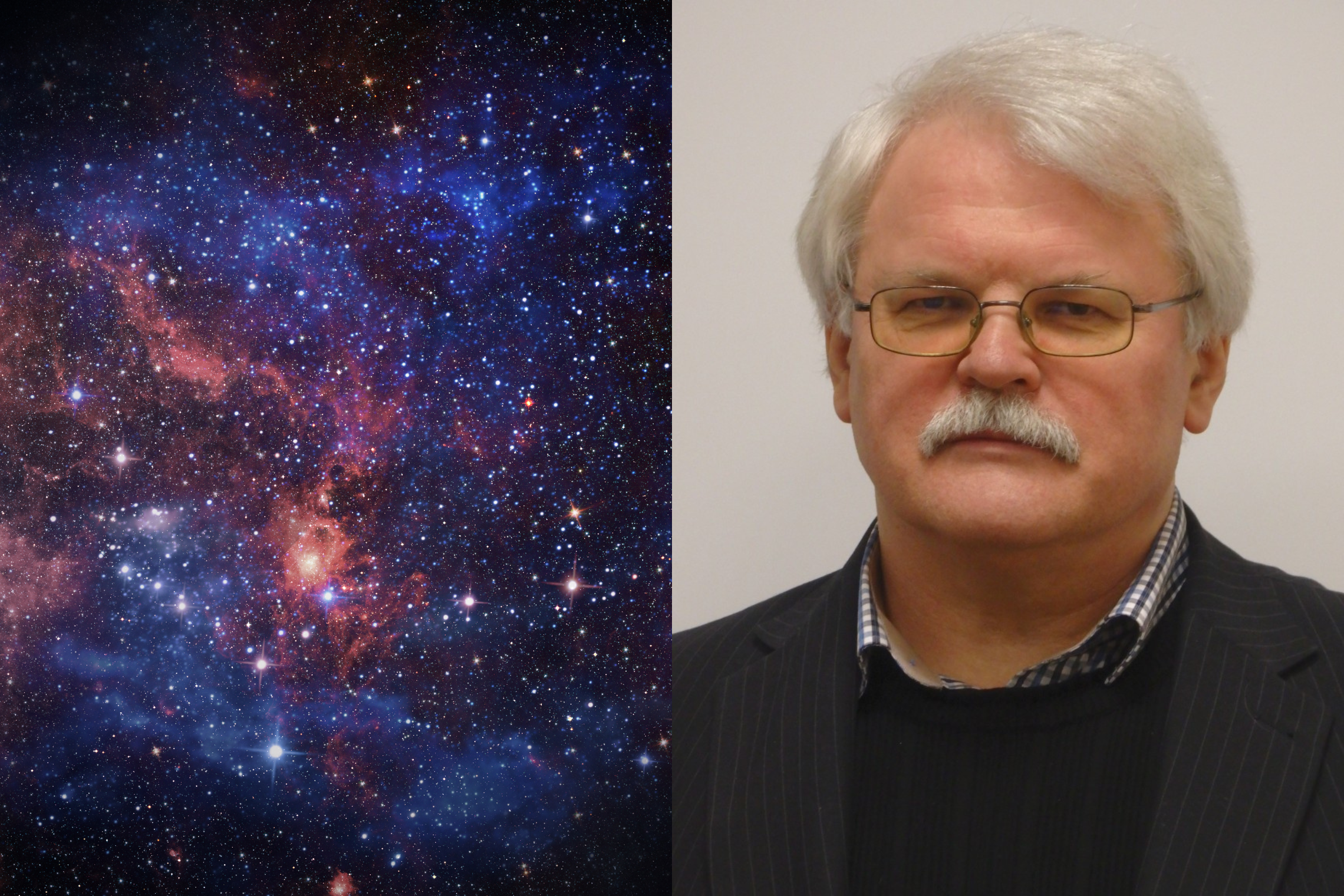
How do galaxies form, and what truly shapes their evolution over billions of years? Scientists are seeking answers to these fundamental questions by looking ever deeper into the Universe, turning their attention not only to the brightest and most easily observable objects, but also to what has long remained beyond observational reach — low-mass star clusters. Although theoretical models suggest that such clusters make up the majority of all star clusters, their role in galaxy evolution remains insufficiently understood.
The Research Council of Lithuania (RCL)-funded project “Star Clusters – the Key to the Formation History of Galactic Disks” opens up the possibility of addressing this gap in an entirely new way. The research, conducted at the Center for Physical Sciences and Technology, employs advanced artificial intelligence and machine learning solutions to search for star clusters in the Andromeda and Triangulum galaxies that have previously been difficult to detect. The researchers hope this will not only enable a more accurate reconstruction of the star formation history of these galaxies, but also significantly expand our understanding of galactic disk formation in general. We spoke about the significance of this research, its scientific scope, and the questions it seeks to answer with the project leader, astronomer Prof. Dr Vladas Vansevičius, Head of the Department of Fundamental Research at the Center for Physical Sciences and Technology.
– Your research focuses on the Andromeda Galaxy (M31). What makes this galaxy special, and what can the analysis of its star clusters reveal about galaxy formation processes in general?
– The Andromeda Galaxy (named after the constellation in which it is visible), also widely known as M31, is the only gigantic system of stars, gas, and dust visible to the naked eye in the northern sky. It resembles our own Galaxy, known by the resonant name of the Milky Way. M31 is larger than ours, but both are dominated by the same structure — a large stellar disk. The Andromeda Galaxy is the nearest disk galaxy, located approximately 2.5 million light-years away.
The Andromeda Galaxy was mentioned in written sources more than a thousand years ago. A century ago, it became the key that opened humanity’s path into the Universe — before then, it had been believed that our Galaxy constituted the entire Universe. This is unsurprising, considering there was also a time when even the Solar System itself seemed like the entire Universe to people. Observations of variable stars in the Andromeda Galaxy made it possible to determine that this system lies far beyond the boundaries of our Galaxy. Today, however, we call it a very nearby galaxy, because our view now extends to regions of the Universe more than 40 billion light-years away. The Andromeda Galaxy and its “Andromedans” have long conquered the worlds of science fiction and cinema, and in recent decades it has become an internet star — portraits captured by telescopes of every scale have flooded the web.
The first time I photographed the Andromeda Galaxy using a relatively large, one-meter-diameter telescope was at the former Lithuanian observatory in Uzbekistan. Looking at a four-hour exposure photograph, I felt a vivid and incomparable connection to the distant Universe. Another, scientifically more productive attempt to study M31 took place using a 2.2-meter telescope at the Mauna Kea Observatory in Hawaii — those observations revealed differences in star formation between Andromeda and our own Galaxy. Eventually, I witnessed the commissioning of the 8.3-meter Subaru Telescope at Mauna Kea Observatory. At my request, one of the first observed targets was the most intriguing southwestern part of the M31 disk. The resulting observational material allowed us to study M31 star clusters in detail for a long time. We discovered that the clusters in the Andromeda Galaxy are almost twice as compact as our local ones, though even now it remains unclear why such a large difference exists.
At first, we blamed the insufficient angular resolution of ground-based observations, limited by atmospheric turbulence even when using the largest telescopes. That is why the Hubble Space Telescope (HST) survey of M31 was such a great joy. These data enabled us to analyse M31 clusters as if they were objects in our own Galaxy observed from ground-based observatories. In HST images, M31 clusters appear as concentrations of many individual stars rather than vague fuzzy spots, as they did in Subaru Telescope images. Thus, about a decade ago, we began a new “space-age” stage in M31 star cluster research. The current RCL-funded project has allowed us to assemble a young research team and given us hope that we will uncover the reasons behind the differences between star clusters in the two galaxies and, in doing so, better understand the fundamental processes governing galactic disk formation.
– Most previous studies focused on bright, massive objects. What fundamentally changes when attention shifts to faint, difficult-to-detect structures? Is this primarily a technological breakthrough or a new perspective on astrophysical questions themselves?
– The brighter a light source is, the easier it is to detect its signal. The more massive a star cluster is, the more stars — and therefore light sources — it contains, making it easier to detect, record in detail, and study. On the other hand, the more advanced the observational technology, the fainter and more distant the light sources we can analyse, including their structure and evolutionary parameters.
We use photometric observations of the Andromeda Galaxy disk obtained with one of today’s most advanced telescopes, the HST. These are images taken through six different filters transmitting light from approximately 270 to 1600 nanometres. These observations are unique in nature — it required roughly two months of observing time and more than seven thousand images to cover a significant part of such a large object, whose projection in the sky exceeds the width of seven full Moons lined up side by side.
In fact, a programme at least ten times larger would be needed for a comprehensive study of the entire M31 disk. Our hope lies in future space telescopes capable of covering much larger areas of the sky in a single image than HST. If just one major war were shortened by a single day, there would already be enough funding to launch such a telescope into space. Unfortunately, human nature is contradictory, and the brighter side does not always prevail. Therefore, humanity’s aspirations must still be constrained by what is already available in telescope archives — fortunately, these are systematically collected and preserved.
The drive to study fainter, lower-mass star clusters is meaningful both technologically and astrophysically. Put more simply, we are driven by a dual ambition: to see what no one has seen before and at the same time to push the limits of image analysis technologies.
– At the heart of your research is the idea that to understand galaxies, we must “see the invisible majority” of star clusters. Why are low-mass clusters so critically important, and how might their neglect have distorted our understanding of galaxy evolution?
– Since stars are born in clusters, and most clusters are low-mass, understanding the stellar component of galaxies inevitably requires us to enter the world of small stellar systems. Such clusters have not been ignored until now; rather, we lacked the observational capabilities to study them properly. Within our Galaxy, they are accessible only within a relatively small region around the Sun, amounting to less than 0.1 percent of the Galaxy’s total volume. This limitation arises from the position of the Solar System within the dusty Galactic disk, where gas and dust clouds obstruct distant observations.
Other galaxies, by contrast, can be surveyed much more broadly, but the detection of clusters consisting of only a few hundred stars is limited by telescope capabilities. Fortunately, we have a nearby neighbour similar to our own — the Andromeda Galaxy. Even with current observational instruments, it is possible there to detect and study star clusters with masses of around 500 solar masses.
Why are they so interesting? One key aspect concerns the mystery of the birth of the Solar System, in which we currently live rather successfully. In short, the Sun itself was also born within a star cluster. The nature of its birth cluster strongly influenced the properties of the Solar System, which ultimately enabled the emergence and evolution of life up to the contradictory being that is humanity. Understanding these processes will allow us to estimate more reliably how many planetary systems similar to our own may exist within the Galaxy.
– You speak about the universality of the star cluster mass function. Put simply: are stars born everywhere in the Universe according to the same rules? How much could your research bring us closer to answering this question?
– Yes, the universality of both stellar and cluster mass functions remains one of the most important unsolved problems in astrophysics. We joke that a Nobel Prize is guaranteed for revealing how the stellar mass function depends on environmental conditions. We have been waiting for that breakthrough for more than thirty years already. Perhaps another decade and everything will become clear. Or perhaps it will resemble the pursuit of fusion energy — whenever you begin, it still seems twenty years away.
The problem of star cluster mass functions is even more complex, involving a vast number of parameters governing cluster birth and evolution, further complicated by stochastic effects. Nevertheless, we very much hope that our contribution — extending the detectable mass range of star clusters in the Andromeda Galaxy toward lower-mass objects — will represent a significant step forward.
– Your goal is to develop a new method based on the analysis of low-mass clusters. How universally applicable could this method become for other galaxies or future sky surveys?
– That is a good futuristic question. Yes, the analysis of low-mass star clusters will undoubtedly become increasingly important. Observational instruments and technologies continue to improve, and the time will come when the sky will be monitored continuously — like a constantly operating all-sky surveillance camera.
The Vera Rubin Observatory in Chile has already begun operations, covering nearly half of the sky approximately every three days. This is a fantastic breakthrough and an excellent pilot project for continuous all-sky monitoring from space observatories. Such monitoring is essential not only scientifically but also for safety reasons, because there are many “flying rocks” out there. Just look at photographs of the Moon and it becomes clear what could await us. Every lunar crater visible through binoculars or a small telescope is essentially an indicator of potential extinction-level impacts for Earth’s civilization.
To answer your question more directly, the applicability of the method will depend on advances in observational technology. Only with more powerful space telescopes will it become possible to study more distant galaxies in as much detail as M31. Using existing and near-future space telescopes, we may be able to reach distances of around 10–15 million light-years, thereby covering a volume of space more than 100 times larger than the sphere surrounding Andromeda. Within about a decade, however, telescopes with mirrors roughly 100 times larger in area than HST are planned for deployment in space. Such telescopes would increase the accessible observational volume for our method by at least another thousandfold, encompassing the full diversity of galaxies.
– The project plans to create a comprehensive star cluster database. What value will it hold for the wider scientific community? Could it become a foundation for new research or even unexpected discoveries?
– Large observational databases take decades to build and are often a thankless undertaking. It is commonly said that those who create them rarely have enough time to fully benefit from their potential, because astronomical data are publicly accessible to everyone. We hope that we will at least manage to carry out a preliminary analysis of our Andromeda Galaxy star cluster database. Once completed and published, it will be used by everyone working in this field, so in a sense we are racing against time.
I believe it will provide an excellent foundation for new research and future observation programmes. Unexpected discoveries are always plentiful in astronomy — one simply has to analyse observational data, sky images, and models carefully and persistently. The fastest route to unexpected discoveries is often the comparison between observations and theoretical models. If observations do not match the models, it means nature has revealed something unknown, or the models themselves require improvement — both are crucial for scientific progress.
– Artificial intelligence and machine learning play an important role in your project. How do these technologies allow researchers to “see” what traditional methods could not, and what challenges arise when working with such complex astronomical data?
– A painful question. For now, artificial intelligence still lags behind natural intelligence in solving these problems. Human experts are currently better at identifying star clusters in galaxies. However, when dealing with increasingly extensive sky surveys, the use of artificial intelligence becomes unavoidable — naturally, together with human intelligence.
At present, our relatively modest computing resources are sufficient for method development and for the study of individual galaxies such as Andromeda. A new qualitative and quantitative technological breakthrough in sky surveys is expected in roughly ten years. By then, we must develop effective analytical methods, and hopefully computer technologies will continue progressing according to Moore’s law.
Honestly, it is extremely difficult to predict the future pace and direction of AI development over longer periods. Yet at this stage, the most reliable method for identifying star clusters remains the trained eye of an expert — or even a somewhat trained volunteer. For example, more than thirty thousand volunteers participated in identifying Andromeda star clusters in HST images. Still, such work can never be perfect, which is why we hope our neural networks will eventually perform better.
The number of detected and measured M31 clusters should at least double, and perhaps even triple, especially through the discovery of new low-mass objects. Yet inevitably, both artificial and natural intelligences will continue spending many months examining the same M31 images side by side.
– Looking more broadly, how might our understanding of galaxy evolution change if it becomes possible to systematically include this “invisible majority” in analyses? Could this fundamentally rewrite some currently accepted theories?
– Yes, if we succeed in bringing low-mass clusters “into circulation,” our understanding of star formation processes within galactic disks will reach an entirely new level. It is difficult to say whether theories will need to be rewritten or whether existing ones will simply gain stronger foundations. Either way, understanding the evolution of galactic stellar disks is directly important to us.
Through this path, we will also learn much more about our own cosmic home — about things invisible from our dusty position inside the Galactic disk, where we are like “hedgehogs in the fog.” At the very least, we may gain clearer insight into what awaits the Sun and its planets during their journey around the Galactic centre. Since the Sun’s birth, we have completed roughly twenty galactic years, and during this long history Earth has experienced everything imaginable — including six mass extinction events during just the last two galactic years.
Naturally, until we learn how to reliably protect our planet from the dangers posed by the Galaxy, this remains a source of justified concern. That is why we seek answers in neighbouring galaxies that can be observed much more comprehensively.
Interview by Ernesta Šneideraitytė, RCL
Last updated: 28-05-2026
Related news:
Lithuanian Universities’ Global Networks: How Can They Become a Strategic Asset for the Country?
More Trees in the City – Cleaner Air? According to a Researcher, It’s Not That Simple
RCL delegation explores Finland’s experience with flagship research programmes
Lithuanian Academy of Sciences and Research Council of Lithuania Sign Memorandum of Cooperation