

“The New Generation with the Research Council of Lithuania” Conference Marks the First Steps of Young Researchers in Science
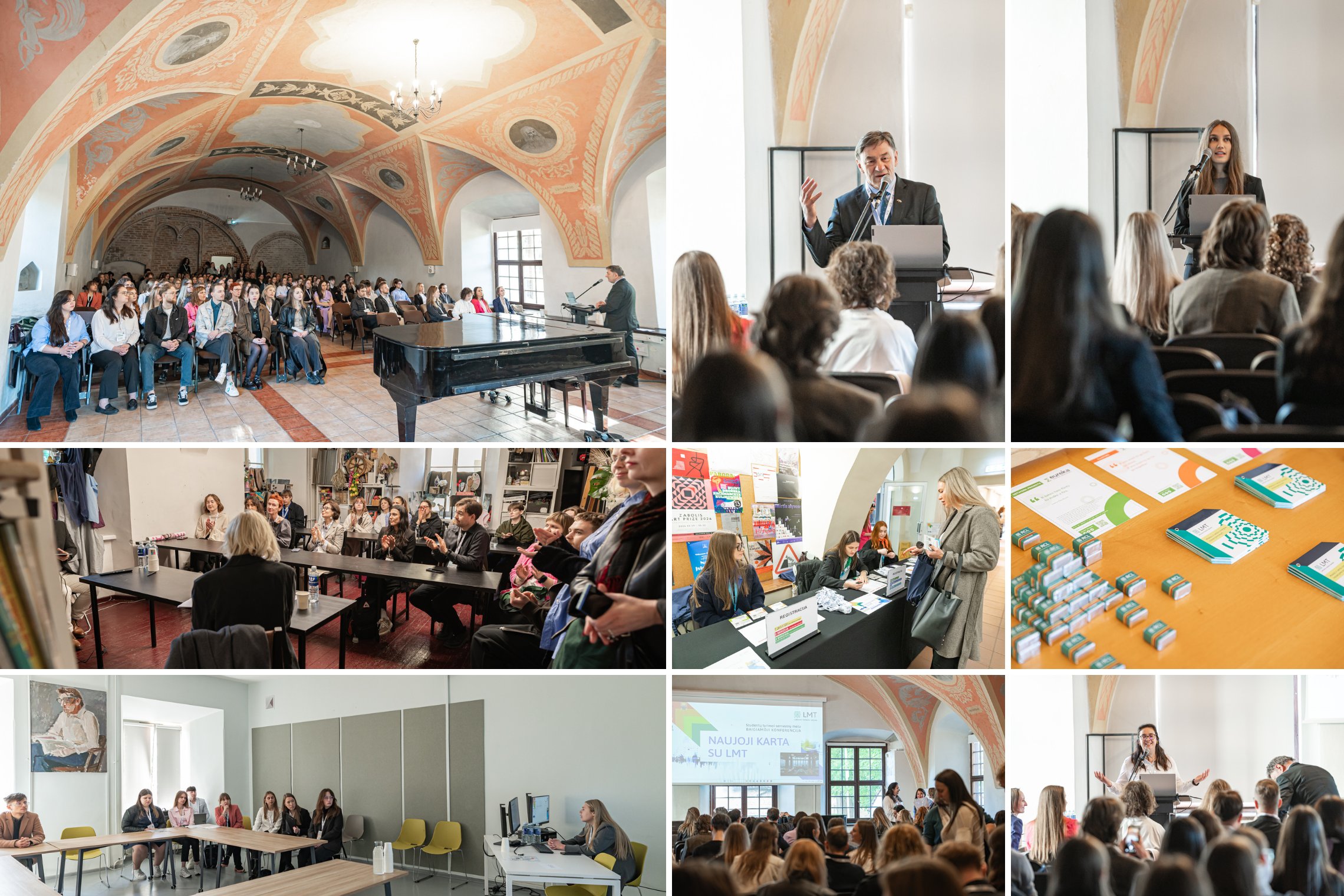
Today, on May 15, the Vilnius Academy of Arts hosted the closing conference of the Student Research During Semesters programme, entitled “The New Generation with the Research Council of Lithuania”, organized by the Research Council of Lithuania (RCL).
During the conference, 108 students presented the research they had carried out across a wide range of scientific fields – from social sciences, humanities, and natural sciences to technology, medicine, agriculture, and the arts. The young researchers explored issues highly relevant to contemporary society, including applications of artificial intelligence, the impact of disinformation, sustainability challenges, advanced medical technologies, innovative materials research, human rights issues, and other phenomena shaping today’s world.
“Science begins with curiosity and the courage to take the first step. Today, this conference becomes a space where young people take their first steps on the academic path – learning to ask questions, seek answers, and trust their ideas. It is essential that they are not afraid to grow, make mistakes, engage in discussions, and move steadily forward. Experiences such as these mark not only the beginning of scientific research, but often the beginning of future discoveries, innovations, and the future of Lithuanian science,” said Prof. Juozas Augutis, Acting Chair of the Research Council of Lithuania, during the conference.
A Space for Academic Growth and Discussion
The closing conference provides students not only with an opportunity to present the results of their research, but also to engage in academic discussions, develop scientific communication skills, and build connections within the research community. This environment is important not only for presenting results – it also allows participants to experience the principles of academic communication, encounter different perspectives and arguments, and strengthen their ability to develop ideas within a broader context.
During the conference, representatives of the RCL Science–Business Cooperation Division consulted young researchers on the commercialization of research results, collaboration between business and science, and innovation support measures provided by the RCL.
Publication “Student Scientific Research 2026”
Alongside the conference, we are also presenting the publication “Student Scientific Research 2026”, which features abstracts of the conference presentations. The publication reflects both the diversity of contemporary scientific topics and the academic potential of young researchers. The published works cover subjects ranging from hybrid threats in the Baltic Sea, greenwashing, and digital disinformation to biomedical innovations, advanced technologies, sustainability solutions, and applications of artificial intelligence.
The Student Research During Semesters programme encourages students to engage in scientific and artistic activities already during their studies, fostering critical thinking, independent research skills, and academic competencies. The programme contributes to strengthening the community of young researchers and nurturing the future generation of Lithuanian science.
The publication is available here.
© RCL photos
Last updated: 28-05-2026
Related news:
Lithuanian Universities’ Global Networks: How Can They Become a Strategic Asset for the Country?
More Trees in the City – Cleaner Air? According to a Researcher, It’s Not That Simple
RCL delegation explores Finland’s experience with flagship research programmes
Lithuanian Academy of Sciences and Research Council of Lithuania Sign Memorandum of Cooperation