

What Kind of Research System Do We Want to Work in by 2040? Europe's Vision – From Shared Values to Real Change
Researcher's working conditions, academic freedom, competition for funding, research assessment and public trust in science may seem like separate issues. Yet they are all connected by one fundamental concept: research culture. It shapes not only researchers' everyday experiences, but also the knowledge that is produced, how it is assessed and the benefits it brings to society.
In 2025, Science Europe, the association representing European research funding and research performing organisations, presented its strategic document, A Vision & Framework for Research Cultures: Improving the Condition for Researchers, Research Ideas, and the Research Endeavour.
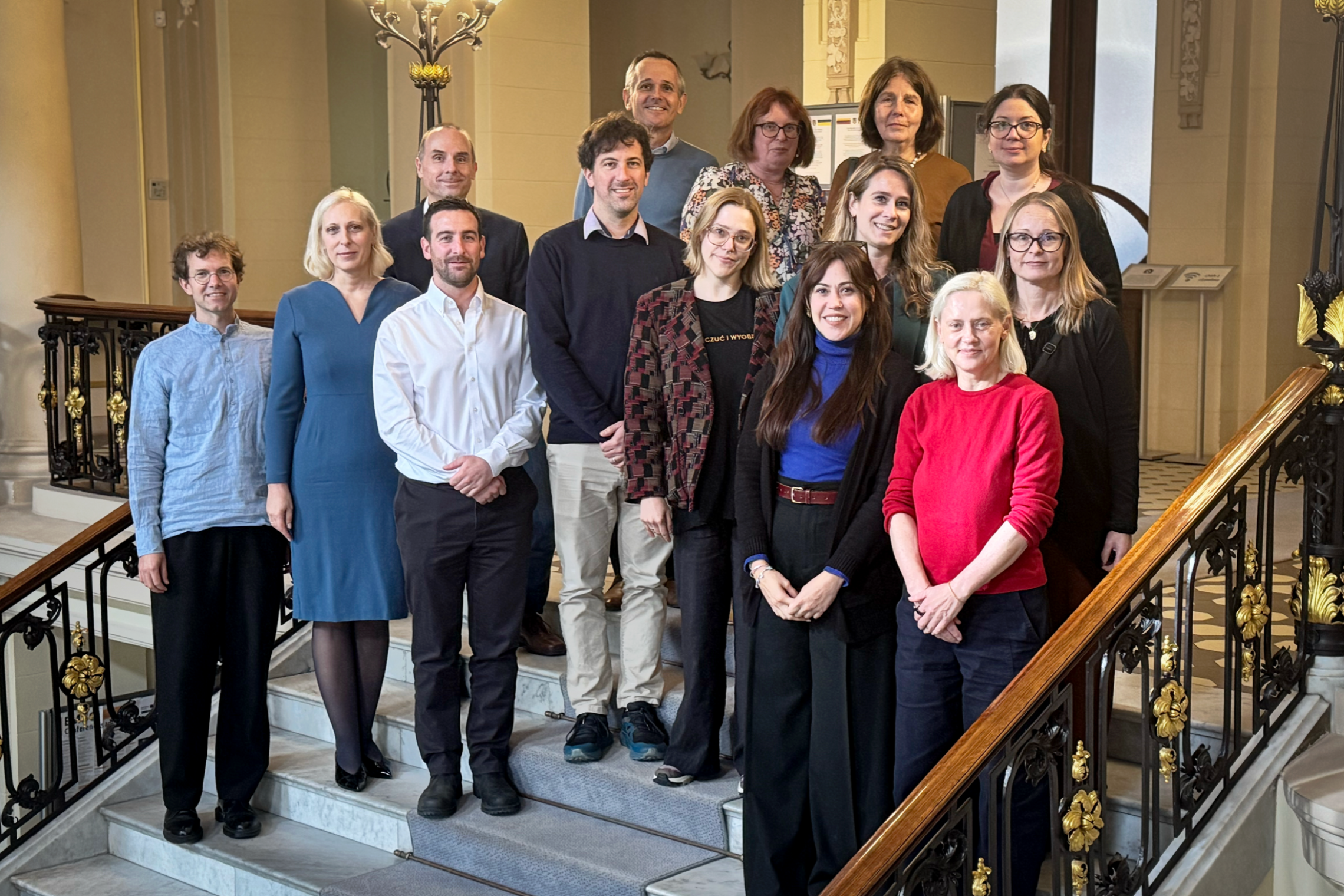
The Vision was developed by the Science Europe Working Group on Research Culture together with the Science Europe Office. Its three lead authors are Sean Sapcariu of the Luxembourg National Research Fund, Jolanta Šinkūnienė of the Research Council of Lithuania (RCL), and James Morris of Science Europe. Jolanta Šinkūnienė and Sean Sapcariu also co-chair the Working Group.
We spoke with the lead authors of the Vision about why research culture is becoming an increasingly important part of the European research policy, what needs to change today, and how this ambitious Vision can be translated into specific actions.
– Let us start with a simple question: what is research culture, and why do we need to talk about it at all?
Science Europe uses the definition developed by the Royal Society in 2018, which describes research culture in terms of the behaviours, values, expectations, attitudes and norms of research communities. It also influences researchers' career paths and determines how research is conceived, conducted and communicated.
For us, as Science Europe Member Organisations, research culture provides a way of connecting the policies and practices we implement with the behaviours and attitudes of the research communities we support. It helps us focus on the people who make up research systems and contribute to the advancement of knowledge. After all, research is fundamentally about people, and culture influences how people are treated within research environments.
Developing and nurturing a healthy research culture also makes meaningful change possible. We can introduce well-designed policies, but their success ultimately depends on how those policies are perceived and whether they are put into practice by the research community.
– Could you share the story behind the creation of this Vision? Why is it particularly important at a time when research culture is facing various challenges and threats?
Our Working Group began its discussions on research cultures by focusing on shared values. In a way, that was the most fundamental starting point. Once we had identified those values, we wanted to define the goals associated with them. What would an ideal research system look like if these values were fully embedded in its research cultures? The entire process, from the initial discussions and definition of shared values to the completion of the Vision, took four years. It is precisely in uncertain times that we need shared goals and a common point of reference. Just as a lighthouse guides ships through stormy seas, we hope the Vision will help keep the essential values of the research system in sight at a time of increasing pressures and numerous threats. We also wanted the Vision to be inspirational, particularly for the younger generation. We hope it will contribute to creating a research sector that can attract and retain talented people, while giving researchers a sense that they can contribute to shaping and improving the system.
– How was the document actually developed? Who participated in the discussions, and how did a single, shared Vision emerge? Were there any issues on which opinions within the Working Group differed?
The Working Group on Research Culture includes representatives from 34 organisations, and the Vision is the result of its work. The idea emerged from discussions within the group about the need for a clear long-term direction. The document went through several iterations, with members providing comments, discussing ideas, editing and gradually refining the text.
Once completed, the Vision was reviewed and validated by the wider Science Europe membership. It therefore reflects a consensus position among all 41 Science Europe Member Organisations.
Naturally, developing the Vision involved many discussions. Perhaps the most significant was how to balance idealism with pragmatism. Some members felt that such an ambitious Vision might be difficult to achieve. That is a valid concern, but ultimately we agreed that the Vision should be bold – something that inspires, encourages transformation and motivates people to work towards change.
Another important discussion point was the singular vs plural of culture(s), and how to best reflect the diversity of cultures present throughout the international research ecosystem.
– The document places considerable emphasis on values, identifying six: autonomy and freedom; collaboration; integrity and ethics; equality, diversity and inclusion; openness and transparency; and care and collegiality. Why is it important to define values explicitly in a research policy document?
Values are the foundation of culture and should underpin the development of effective policies and practices. This is one of the central principles guiding Science Europe's work.
Research culture can seem like a rather abstract concept, whereas values are easier to understand and relate to everyday experience. They are more tangible and can be more readily internalised and translated into action.
When values are clearly articulated in research policy documents, they become more visible, attract attention and can inspire people to act. One person may feel particularly strongly about collaboration, another about academic freedom or collegiality. In this way, values can resonate not only with the research community, but also with individuals.
– Cultural change takes time. The Vision sets a direction towards 2040 and emphasises the need for sustained, purposeful action. What would the research system look like if this Vision were implemented? What conditions should we create to enable researchers to conduct research of the highest quality?
We have tried to illustrate what an ideal research system might look like through the eight aspirations described in the Vision. These cover research careers, society's involvement, diversity, fairness, integrity, collaboration, academic freedom, innovation and the combined efforts of everyone involved.
Of course, we recognise that developing a vision is the easier part. The more difficult challenge is agreeing on and implementing the actions needed to move towards it. This is where much of our current and future work is focused – moving from vision to action.
The Working Group on Research Culture consistently uses these aspirations to guide its activities. One recent example is the Task Force on Research Careers, which operates within the Working Group and has developed a set of minimum standards for research careers. This directly addresses the Vision's aspiration to make research careers more attractive and sustainable.
– The Vision states that research careers should be "attractive, sustainable, and fully supported". What are the main barriers preventing this from becoming a reality in Europe today?
One of the most obvious barriers across Europe is limited funding. Securing research grants and continuous financial support for research activities remains a significant challenge, particularly for early-career researchers.
But funding is not the only issue. Researchers also face precarious employment conditions, short-term contracts, mobility challenges, unequal opportunities to conduct research across different countries, and various forms of bias.
– If a young person in 2040 were considering whether to pursue a career in research, what would we want them to see?
We would want them to see a sector that advances human knowledge while doing so in a collaborative, collegial, open and ethical manner.
People should see opportunities not only to use their skills, but also to develop them further – contributing to the advancement of knowledge and its application for the benefit of society and the world more broadly.
It is also very important that young people see a research system that values a wide range of research ideas, contributions and skills. Research is not only about publications or scientific discoveries. Teaching, community engagement, leadership, creativity and many other activities are equally important parts of the research endeavour.
– The document strongly emphasises collaboration, mutual support, mentorship and interdisciplinary work. Yet academia is also a competitive environment, particularly when it comes to funding, positions and recognition. How can we strike a balance between competition and collaboration?
Healthy competition drives innovation forward. However, when competition becomes hypercompetition for scarce resources, a range of problems can arise, undermining the diversity of people and ideas that is so important to research.
For example, it can reinforce the so-called Matthew effect, whereby already established researchers with greater resources gain further advantages. Biases may emerge in research assessment and peer review, while inequalities in opportunities for early-career researchers can become more pronounced.
Another concern is an excessive reliance on quantitative indicators. When improving performance metrics becomes the primary objective, there is a risk that people will focus on optimising their scores rather than on the quality of their research.
It is up to the entire research ecosystem – funding organisations, research institutions, research group leaders and others – to ensure that competition does not become more important than the other goals of research. It needs to be balanced with other values to maintain a healthy research culture.
– One of the most prominent themes in the Vision is academic freedom. How much freedom can researchers actually have when their research is funded by public money?
Academic freedom is about creating the conditions that allow researchers to pursue scientific questions that interest them, using the approaches they consider most appropriate.
It is a kind of social contract between the research community and the public. Of course, there is a need for research that addresses societal challenges. Governments are well placed to identify urgent issues where research can support policy development and contribute to the well-being of society.
But in an ideal research culture, there is room for both approaches. Some researchers will naturally want to focus on pressing societal needs, while others will be more interested in fundamental or theoretical questions.
– The Vision also addresses society. What role should it play in research culture?
Our Vision envisages active public engagement throughout the research life cycle. This is one way to strengthen society's trust in science.
Public trust in science is fundamentally important. It not only strengthens societal resilience and critical thinking but also helps build public support for research and innovation.
– The document also mentions artificial intelligence. In your view, how will AI change not only research methods but research culture itself – including authorship, trust, responsibility and researchers' skills?
The growing role of artificial intelligence has undoubtedly already brought significant developments to the research ecosystem. We can see this in various areas, from increasing competition for international research funding to AI-generated publications and emerging questions about ethics and research integrity.
The impact of AI could be felt in different ways. It might accelerate the development of more qualitative approaches to research assessment and renew discussions about what really matters in science – the number of publications produced, or their quality and impact.
It could also bring renewed attention to the concept of *slow science*, which many researchers have already been discussing.
– How will we know that research culture is truly changing?
Some changes will be clearly visible, while others will be more difficult to observe. This is the nature of cultural change, as with many other forms of organisational transformation.
We are currently working on the concept of a *Research Culture Barometer*. This would be a qualitative assessment tool designed to help us understand whether research culture is moving towards or away from the objectives set out in the Vision.
– What does this European Vision mean in practical terms for Lithuania and Europe as a whole? In which areas of Lithuania's research system are we already moving in this direction, and where do you see the greatest gaps between the desired and current research cultures?
From a broader perspective, we can see positive developments in Lithuania, as in many other European countries. Research funding and research performing organisations strive to make research careers more attractive, attract talent and strengthen public trust in science.
Efforts are also being made to move towards more qualitative research assessment, recognise diverse forms of contribution and make the research sector more attractive overall.
Nevertheless, many challenges remain. We hope that consistent, collective efforts to achieve the aspirations set out in the Vision will contribute to healthier research cultures, both across Europe and within individual national research systems.
---
About the Vision
Science Europe's *A Vision & Framework for Research Cultures: Improving the Condition for Researchers, Research Ideas, and the Research Endeavour* was published in March 2025. It identifies eight long-term aspirations towards 2040 and a supporting framework for their implementation.
The Lithuanian translation of the document was funded by the Research Council of Lithuania.
Read the Vision in Lithuanian here.
Last updated: 12-11-2026
Related news:
Lithuania Co-Organises the GRC European Regional Meeting for the First Time
Lithuania and Taiwan Strengthen Cooperation in Laser Technologies